


White, Short Memories
- Natalie Kendel

- Mar 25
- 21 min read
Updated: Mar 28
The Tree and The Axe
Over the past two years of the Palestinian genocide, we've talked a lot about the collective amnesia of white people. The forgetfulness and the short memory of white society. This forgetfulness is a direct result of white supremacy, is made possible by privilege, and is reinforced deliberately.
There is a wise Shona proverb which goes: “The axe forgets, but the tree remembers.”
The meaning is simple yet profound: the one who inflicts harm will more likely forget the harm done, while the one cut won't. Rather, can't. Additionally, it is the tree which has the truer memory of the event than the axe. The tree is the reliable witness, not the axe.

This proverb perfectly captures a dynamic which unfolds between white society and the global majority. Systems of domination are often maintained not only through force but through collective and individual forgetting. White society and its agendas are only supported and made possible through this collective forgetting. Forgetting is a powerful oppression tool, while the memory of the oppressed is a damning witness and a true perspective enforcer. Forgetting can win the ongoing approval/complacency of the white population. It simultaneously blinds them to past events being predictors of future events, denies mountains of evidence of wrongdoing, and it keeps in tact the deception that is white supremacy. White forgetting allows the oppressor to paint the horrors they do as one-time, unfortunate flukes, instead of systemic, planned, and ongoing.
Not Past, But Present
The oppressed, on the other hand, remember accurately the white violence that structures their lives because they must; it is written into their daily reality. It is not a past event to be memorialised, but a present evil hunting them.
Many white people have been known to subtly (and explicitly) critique victims of white violence. Black South Africans, First Nation peoples, The People, members of the African diaspora are denigrated for "going on about the past".
"Slavery happened so long ago."
"Get over it already."
"Well, you're free now. Stop complaining."
"That happened to your grandparents, not to you."
This commentary in itself reveals two fatal flaws of white society:
1. The assumption that the white oppression inflicted on the global majority is in the past.
2. That such great suffering politely remains fenced in by generational gaps and the simple passage of time.
Many white people believe the suffering, death, and oppression they inflicted is contained within one or a few historic event. They do not realise (or refuse to acknowledge), that white violence is ongoing and relentless. It isn't in the past, it is a constant present. Slavery never ended in the US Empire, it was repackaged as its "prison system". The KKK didn't end, its goals were rebranded and hidden in plain sight. Systemic rape by white men didn't end, it is a baseline experience of girlhood and womanhood.
The genocide of The People didn't stop; their girls and women are still hunted, their land remains stolen, their land destroyed by nuclear waste dumps, their water poisoned. And as Macklemore sang: "The Nakba never ended; the coloniser lied." It's the reason pictures of Martin Luther King Jr., Malcom X, and the US under Jim Crow are printed in black and white instead of colour (there was colour photography at that time.) It's meant to frame all of these things in the past, and therefore, out of the reach your hands or of change.

The oppressed live with present, ongoing suffering. The oppressor, by contrast, has the luxury of distance. Their comfort allows them to forget. The white population get to pretend that either past atrocities didn't happen, or that they remain in the past, instead of being carried on. If they do recognise any wrongdoing, they hide behind the "I can't take responsibility for what my ancestors did" excuse.
Even if white oppression was in the past instead of ongoing, the mere fact that a white person could ever think that slavery, apartheid, genocide, or rape could ever remain tucked nicely away in history, instead of having generation-spanning, passed-down, disastrous effects, reveals that they are fundamentally blind to the true depth of their evil. Traumatic injury doesn't just go away.
White people talk about these evils like they are far-off history, but were we to reshape the Shona proverb to reality, it would look more like this: "The axe is still hacking away at the tree - not one tree: every tree. And as it hacks, the axe says: 'Why are you screaming? Stop complaining. You deserve it. I'm not an axe, I'm a tree-carer. Why won't you grow? Why aren't you thriving? See, that is proof of your lacking and inferiority. I'm not hacking, you're just sensitive.'"
Here is the plain truth: The axe is a liar. The tree is the reliable, accurate witness. Always.
This isn't a matter of one party refusing to move on, or "clinging to the past", but rather that the tree permanently bares the reality of what happens and doesn't have the privilege of forgetting because the axe has never stopped chopping.
Knowing The Monster
Across centuries of white colonialism, enslavement, segregation, apartheid, bias, and racial hierarchy, the imbalance of memory has ruled white spaces. The oppressed have a truer picture of who the oppressor is than the oppressor does. Black people often know white people better than white people know themselves. Communities that endure oppression—Black communities, Indigenous peoples, immigrants, colonised populations—hold a clearer understanding of how power actually operates than those who benefit from it.
Oppressed peoples don't possess some mystical insight. They hold the facts in their heads, instead of letting them slip away into the ether. Why? Partially because remembering is a sacred thing, and unlike their oppressors, the suffering isn't treated like a passing thought. And partially because their survival depends on it. Communities that have endured white oppression develop an acute awareness of power because ignoring it is dangerous. Parents teach their children how institutions really function, how authority figures may treat them differently, and how to navigate systems that were not designed for their protection. Not to keep their children bitter; to keep them alive. These lessons are passed down across generations. Almost every Black parent living in the West has had "the talk" with their child. That talk entails explaining to them the racism they will endure, the dangers, and how to stay alive.
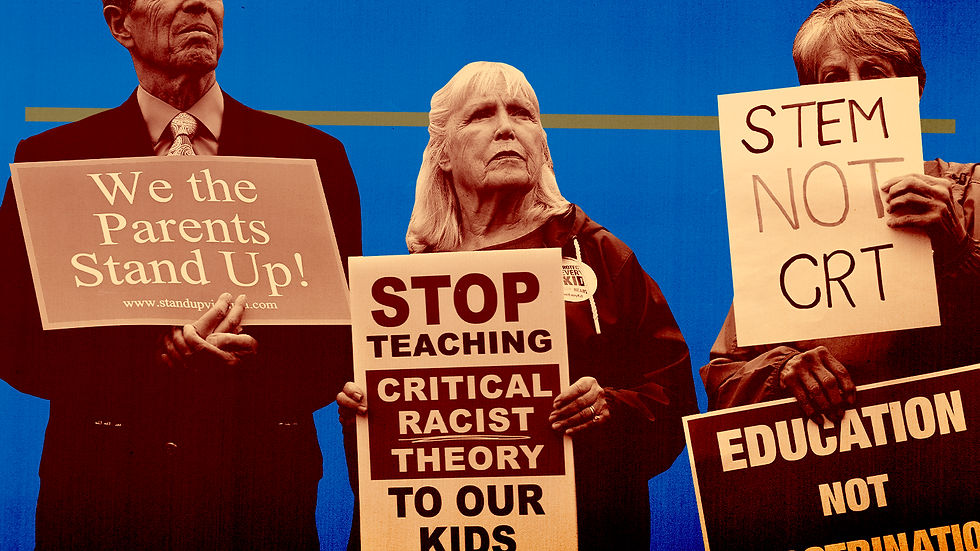
On the other hand, many white parents still complain about anti-racist education in schools and protest Critical Race Theory. Again, we see the forgetfulness and distancing of white people. In this case, an insistence on be shielded from the truth. But Black and Brown people don't have that option. When you have to survive a monster, you learn its behavioural patterns better than anybody. Even better than the monster itself. These lessons are the truth, not one option of many. They are accurate. One's daily survival depends on recognising the structures that shape their lives.
In short, oppressed people are experts on the monster that is white society. And yet, they are never treated as experts. They are treated with scepticism, distance, and white people pretend nuance and complexity where there is none.
Unlike the crystal clear memory of the global majority, members of white society frequently experience history in fragments, if at all. They are fed non-stop spin and propaganda. Moments of horror briefly interrupt the narrative they tell themselves about their society, only to be smoothed over again with time. Atrocities become "unfortunate exceptions" rather than reflections of whiteness' true heart; instead of being called what they are: deeper patterns, and proof of systemic violence. This allows a socially-accepted response of minimising in the face of the oppressed's narrative. A cordoning off of violence like it's an unusual crime scene, not policy.
History on ICE
A prime example of shielding via forgetfulness can be witnessed in how white Americans are currently reacting to ICE. Every time the terrorist-entity known as the "immigration enforcement agencies" carry out aggressive raids, or when footage of state-sanctioned murder circulates online, white Americans express shock. Political leaders and commentators repeat the same phrase: “This isn’t who we are.”
But for marginalised communities, the statement rings hollow. Are you kidding me? How can someone be so obtuse? For the global majority, such a statement this is drivelling nonsense.

When shocking events occur, white reaction often follows a familiar script. There is initial outrage: gasps, condemnation, declarations that such brutality is unacceptable. Yet within months—or sometimes even weeks—the language shifts. People begin asking questions that suggest the violence appeared from nowhere. They clutch their pearls and gasp in the moment, but then months later will utter folly like:
“How did it come to this?”
“How is the world in this state?”
“What is happening?”
“This isn't who we truly are.”
This isn't who we are?! This is exactly who you are. Who you've always been. Since the barbaric start to your European society. Since the first white, European set foot on The People's soil. White people chronically do not let the evidence of their society colour their view of their society. As previously said, "bad" things are compartmentalised as individual events instead of symptoms of their true face.
From the perspective of Black Americans, Indigenous peoples, and many immigrant groups, the machinery of state violence is not new. It's is daily fact. It hunts them. It is part of a continuum that stretches back centuries.
The United States was built through the genocide and displacement of The People. Its economy was constructed upon slavery. Segregation, redlining, rape, forced sterilisations, discriminatory policing, and mass incarceration. None of this is new. And now children (young girls) are being raped by ICE agents while in detention centres and falling pregnant, women and girls are given unnecessary gynaecological exams and may force-sterilised. Families are torn apart, people are dying on mass. Many denied health care, their Bibles, books, proper sleep, and are sleeping hundreds to a cage.
For those who live within these realities, the present terror of ICE does not appear as an inexplicable rupture. Instead, it looks like the latest chapter in a very long story. But the fact that white people are shocked at ICE reveals two pivotal things:
The truth of white amnesia and how deep the delusion sits in them.
White people have not truly been listening to or believing Black and Brown people.
You're surprised about ICE? That means you weren't listening to immigrants all these years. You're surprised at police brutality? That's proof you didn't believe or listen to Black voices.

White amnesia also affects the connection between local and systemic. Where white people see local events, the global majority know it is simply one dot in a systemic problem. The problem is not the particulars of one violent act, but the system itself. This is why white people will focus in on firing one murdering policeman, instead of shouting with the rest of us: "Defund the police!" Oh no, that seems a little extreme, doesn't it? Painting them all with the same brush? No, no it's not extreme. The corruption and violence of the police is what's extreme.
White people can often not comprehend calls to tear down the entire system, and deem such voices as an overreaction and a disproportionate response. "Now, now. Let's not throw the baby out with the bath water. There are some good cops, after all. There are some decent soldiers after all. We need defence systems after all. We can't have anarchy, after all."
White society ignores the root of the problem, because that would demand dismantling the whole damn thing. And that certainly falls outside their comfort, as well as their imaginations.
People insulated from the realities of white violence experience the same institutions in entirely different ways than are accurate. Police officers appear as protectors. Doctors and nurses appear as non-biased, benevolent helpers. The military is honourable and noble. National myths feel credible. Government power seems fundamentally benevolent, even if occasionally flawed. And anything to the contrary is labelled as paranoid. It's so easy to discredit a voice when you paint the person behind that voice as merely bitter. Or too extreme.
The continuation of white society relies on mythology. A mythologising of their institutions, their history, their forefathers.
In the example of the police, when protests erupt against police violence in the United States, many white Americans react with confusion. They ask why people would distrust the police so deeply. They don't understand why we call for the "radical" defunding of the police. They express disbelief that law enforcement might function as an instrument of control rather than protection.
The Clown and The Smug
Nationalism, masking as patriotism, plays a huge role as both enforcer and manifestation of white forgetfulness. It is the horrors wrapped in honour, the ugliness draped in devotion. To be a white nationalist always depends on this selective remembering.

Nationalism is an often misunderstood ideology. Its ideology is not merely "loving one's people", or being proud of a certain country. Nationalism, at its core, assumes an inherent superiority and exceptional. (Even if this is not overtly stated.) One can love the real people in one's country - one can love the mountains, the rivers, the land - but nationalism is more than that; it's a poison dressed up as a noble virtue. It appeals to emotion, identity, it pretends community bonds, and unity. It hijacks noble pursuits like heroism, sacrifice, family, duty and loyalty to protect its lauding from critics.
But where there is strong nationalism, you can be sure there is deep racism.
Nationalism promotes. by default, an "us vs. them" mentality, prioritising one nation's interests above all others, which fuels conflict, exclusion, xenophobia and exclusivity. It cultivates irrational, emotional loyalty that justifies authoritarianism, human rights abuses, and war.
Nations construct identities through stories—stories about who “we” are and what “we” represent. These narratives typically emphasise heroism, moral clarity, and unity. But such stories in countries in the global West never hold up under closer examination. Not ever.
The US Empire is a good example of a white society that touts nationalism and patriotism to the extreme. The excessive displaying of the flag, the language surrounding the military industrial complex, the telling and retelling of the founding fathers myth, children swearing allegiance to the flag every morning, the pounding of the war drum, the pressure to "support the troops", the glorification of military "heroism". The growing isolationism, and ignoring internal instability and dysfunction.
White forgetfulness shapes how societies view their past conflicts and military actions. The US still lies to itself and others about the war (invasion) of Vietnam. During the 60s the government didn't call it a war, and in the present-day the Vietnam war is still framed as a victory or a draw, instead of a damning and complete US defeat. The same goes for Afghanistan and Iraq.
Despite its string of military defeats and humiliations, the United States holds public rituals celebrating soldiers as defenders of freedom and democracy. The phrase “support the troops” carries powerful emotional weight. It is nothing less than a form of manipulation meant to make the white population buy in to whatever new violence their government has decided to inflict on others. The US is a war machine donning the costume of a nation. Bloodshed, terrorism, and violence is not only its method but its end goal. And yet, because of the heady cocktail that is patriotism and nationalism's narrative, white people buy into the mythology of its own heroism. "America First", anti-globalism, American Exceptionalism and Manifest Destiny continue to fly under the radar of many consciences.
The US Empire might be clownish, but there is another darkness which benefits from standing the clown. Because, on the other end of the spectrum, we have the example of the polite, "pure", Norwegian nationalism.

Feminism aptly teaches that all men benefit from the actions of violent men - even the non-violent ones. Because the existence of violent men grants ‘good’ men awards for basic decency or poor behaviour; so long as it isn’t violence. In a similar way, Norway (and Scandinavia as a whole) has benefitted from The US' clownish version of nationalism. Norway looks like a saint next to the drooling monster across the the Atlantic. But Norwegian society, like the US, is full of national pride and a sense of superiority, except it presents in a subtler way. Which makes it harder to pin and harder still to criticise. Norway is the passive aggressive bully in the classroom, and while the US is busy beating its victims to a pulp, Norway stands by and watches, filing its nails, and tutting quietly.
Norwegian nationalism is often characterised by a strong sense of pride in the country's social model, egalitarian values, and natural beauty. This manifests as a subtle and more "civilised" sense of cultural superiority. For those outside the Norwegian bubble, they correctly identify this attitude as "smugness" and "self-righteousness". A 2018 survey indicated that a majority of Norwegians considered their own culture superior to others. Norwegian public discourse constantly bubbles with exceptionalism, arrogance, and self-conceit, but because it's done so politely, so subtly, it's not immediately flagged as problematic. Norway's hands are no less bloodied just because their dealings in genocide, murder, racism, xenohatred, and violence is kept neatly between pages of bureaucracy, channeled through the language of business, policy, and trade agreements, and presented by well-mannered, blue-eyed representatives. Their oil fund remains European's largest financial investor in Israeli companies.
But Norwegians are masters at using the rules in their favour, and hiding behind the fine print and parliamentary procedure to, in essence, commit great violence according to the law and order. Again, in comparison with the US, Norwegian nationalism is conveyed in such a reasonable, calm, civilised tone, it often avoids scrutiny or any real criticism. But presenting as less aggressive than the US makes it no less dangerous. Perhaps, for that reason, it is the more insidious of the two.
From US Imperial military pride, to Norwegian nationalism, nostalgia and sentimentalism is a super-powerful tonic. It intoxicates anyone who drinks it. The US and its rewritten history of the American Dream. Norway's national romanticism being like a blanket drawn over its own foulness. And the gap between the story and the reality, in both cases, is loud.
The same contrast appears in the experiences of immigrants and the global majority across Europe. While white national narratives emphasise tolerance and progress, the oppressed know otherwise, as they live through racism, exclusion, blame, hatred, micro and macro aggressions every single day. The US Empire preaches freedom, but is the greatest source of terrorism around the world. Norway claims its own peace-loving but continues to fund ''Israel''. Germany shouts "never again" but assaults its own citizens for peaceful protests for Free Palestine, and still enforces white colonialism abroad, such as in Namibia, where Germans own 70% of the land, even though they only make up 2% of the population.
The US Empire's boasting, Norway's claim of their own ethical virtuousness, it's all part of white false narrative. Lies.
Nostalgia and Sentimentalism

Nostalgia and sentimentalism are potent blinders in white society. Their efficacy stem in large part from how harmless they seem, as well as the pleasing aesthetic and emotional landscape they inhabit. But white nostalgia and sentimentalism are only make possible by forgetfulness. After all, you can only have fuzzy, warm feelings and longing for the past if you think that past was good and desirable. People who enjoyed their high school experience view those days favourably; those who had bullies (or any real sense of the world beyond those walls) know better. There is never-ending mockery of those who "peaked" in high school. Similarly, the false or shielded memories of white people is what permits nostalgia to flourish so easily. It is a telltale sign of people who are and were shielded from the realities of the world.
As even white society has felt affects of its own sins, in recent years, social media has been flooded with nostalgia posts. Pictures, videos, vlogs romanticising the 80s, 90s, and early 2000s. Many millennials, particularly following the start of the Covid-19 epidemic and the re-election of Trump, have expressed a desire to return to the world they remember from childhood—a time that now appears simpler, safer, and more hopeful.
"I wish it was 1996 again."
"Can't we just go back to 2005 again?"
"Things were better back then."
"The world had colour back then."
"It was a simpler time."

Viral trends such as the Aero Frutiger aesthetic, returning to physical media, old tech (the pre-smartphone era), embracing grunge fashion, Y2K style, and the Gen Z Instagram trend: "What Were You Like in the '90s" are outcrops of this movement. However, nostalgia for these years reveals a fundamental ignorance and privilege. During those same decades, your governments were still murdering, bombing children, starving families. Africa was being ravaged, children trafficked, children chronically sexualised, women starved as eating disorders were glamourised, sovereign national leaders assassinated by the CIA, governments deposed, and regions destabilised. During those decades, Europe and the US illegally waged wars, imposed sanctions, expanded prisons, shot Black people, and ruthlessness oppressed marginalised communities.
The suffering did not suddenly begin in the past ten years. Things haven't gotten worse; they've gotten more visible to some. It existed then as well; it was simply out of view to those who were not directly affected. But again, white forgetfulness does its work, causing Americans to, for example, blame the present state of things on Trump instead of the very society that created him. Trump is not un-American, he is the epitome of white America. He is a perfect reflection of the true heart of the US Empire. The violent, pedophilic, moronic, rapist, narcissistic clown without honour, intelligence, or sanity.
The US Empire isn't in the state its in because one political party is in power instead of the other. Americans constantly act as though they are one election away from salvation. And then, to the stunned reaction of the rest of the word, their memory resets each four years. The US doesn't need another presidential election. It doesn't need reform. It needs to be torn down permanently. Capitalism, white supremacy - it all needs to burn. But white people will look to the next election, and focus on the demonising of individuals (who, albeit, are at times demonic), instead of seeing the root cause, the true problem.
We don't need to go back to the 90's. We don't need to reclaim the Aero Frutiger future we were promised. Whiteness, and its violent structure, must end.
A Burst Bubble
To some degree, technology cracked open a door for a some. Allowing a shift in visibility. The rise of smartphones and the unfiltered internet has brought images and testimonies from around the world into everyday life. It is proof in the palm of your hand. Unedited white violence, without the spin of the empire. This technology has allowed white people to have access to the real narrative, if they choose to look. Events that once remained hidden behind media gatekeepers can now spread globally within minutes. Violence that might once have been ignored is harder to conceal.
We have been watching the first live-stream genocide in history. But the fact remains: it still remains up to the white individual to:
Watch, listen, and take in the evidence
Put aside lies and accept the truth
Make sure that truth leads to radical, changed action
Sadly, the privilege, arrogance, and wilful ignorance of white society is something not even a live-streamed holocaust can cure, unless the individual decides to let it.

Palestine has been the cracked door for many. For some white people, the Palestinian genocide did burst their bubble, woke them up, and they have responded with radical change. Many have described Gaza as having a global ripple effect, where Gaza led them to "Israel", which led them truly seeing the US for what it is, which led to white imperialism, then to white patriarchy, then to... the list goes on. They've accepted that a painful change in their entire view of the world view was necessary, and that active response was needed to save their own souls.
But for many others, this sudden exposure to the truth has created the illusion that the world has only recently become more chaotic or brutal. In reality, the brutality has always existed. What has changed is who gets to see it.
The stories white people were told about their societies—stories of fairness, benevolence, and progress—begin to conflict with what they are witnessing. When white people encounter these realities for the first time, the experience can be destabilising, and they will often resort to their baseline response:
self-pity
centering their own emotions
loud despair
distraction/comfort/avoidance
These responses have indeed been widespread, instead of the correct response which is to turn the rage, grief, and horror into just action. Acting justly, choosing daily humility, and allowing the anger and grief to mobilise them.
Many white people believe that the grief itself absolves them of responsibility. So they wring their hands and cry, but fail to boycott, protest, or get involved in activism lead by the oppressed.
For every conscience on this planet, a choice emerges:
One option is to listen seriously to the voices of those who have long described these injustices. Doing so requires, as we've said, humility. It requires centering the leadership of the oppressed, letting go of ego, and letting them lead you. Not taking over the movement, or playing the role of the white saviour, but become a fellow saboteur and conspirer. It requires acknowledging that one’s understanding of history and current reality is false.
The other option is to retreat into denial. Denial can take many forms. Sometimes it appears as defensiveness: accusations that critics are exaggerating or attacking the nation unfairly. Sometimes it appears as sentimentalism: a renewed emphasis on national pride and comforting myths. For those deeply invested in the white forgetfulness narrative, confronting these contradictions can feel like an attack on their identity itself. Thus, defensiveness and even violence rise up to meet the truth. But always, it appears as selective memory: focusing only on the aspects that reinforce a positive self-image.
In the face of great evil, neutrality is a laughable delusion. White people must pick one or the other.
"I'm a good person!"
The flip side of the coin of the avoidance/denial option is that, even while white people deny, turn a blind eye, or do nothing, many of them also wish to see themselves as compassionate and ethical. They want to seem good. They want to believe they stand on the side of justice. They've spent their whole lives living under the assumption that not only are they the main characters and protagonists of the story, but they are also "the good guys". Most white people automatically claim baseline virtue because that is what whiteness has told them they're due.

This creates a tension: How to maintain a positive self-image while avoiding the uncomfortable truths raised by marginalised communities?
One common strategy is symbolic allyship—expressing solidarity in ways that do not require significant changes to one’s worldview or material conditions. Statements of support are offered, but the deeper structures that produced the injustice remain largely unquestioned. We often see this type of posing on social media: white people will post a black square on their instagram, but won't post/speak up regularly. We also see this symbolic allyship in the actions of white women who will sooner make arts and crafts (the pink pussy hat, blue pins, etc.) instead of aggressively educating and changing themselves and those in their sphere of influence. Being an ally gets turned into an aesthetic, instead of genuine change, with a focus on merch, clothing, fashion, and non-direct action.
You can currently see this symbolic allyship in Norwegian protests: Norwegians are more likely to march around saying "La Barna Leve" (Let the children live), instead of "Free Palestine!" This may seem like nitpicking, but it's actually a perfect nutshell of how white liberalism goes for the line least likely to be challenged, instead of the underlying revolutionary necessity, which is the liberation of Palestine from its occupiers. It's why so many Norwegians will focus on banning "Israel" from Eurovision, or from the winter olympics. As if taking part in a song contest is the most pressing thing. It is a constant scaling-down of the real issue, a missing the point by two degrees. Norwegian culture, being inherently non-confrontational and adverse to conflict, produces allies whose protest still appeals to the non-existent conscience of the death machine that is white society, and insists on moving through the proper channels to do it. Thus proving that Norwegians still haven't learned/do not believe that the channels themselves are the problem.
Another strategy is temporal distancing. Atrocities are acknowledged but pushed safely into the past or so far abroad that it might as well be in another world. Slavery becomes something that happened “long ago.” Colonialism becomes a historical footnote rather than a reality in Palestine, The DRC, Venezuela, Cuba, Sudan, Namibia. This distancing allows individuals to condemn historical/ "otherness" wrongdoing while preserving the idea that their present society is fundamentally good. And by association, so are they.
Two Two-Forked Road
Cole Arthur Riley wrote in "Black Liturgies", "The oppressor can never be trusted as historian. Our task is preservation. Collective memory is a liberation practice. Remember and tell it."
Poet and writer, Lucille Clifton wrote:
"they ask me to remember
but they want me to remember
their memories
and i keep on remembering
mine."
Memories of oppressed peoples and communities is dangerous to the white lie. Their narrative tears at the boundaries of our untruthful textbooks, threatens the fragile structure of its ego and spun tales. It wrenches white colonialism off the page, and brings you face to face with real people inside Gaza Concentration Camp. It draws the direct line between the products in your shopping basket and an evil empire. Between the money in your pocket and the crushed bodies of infants. It places the mass rapes in Sudan side by side with your apathy, as you holiday in Dubai or fail to boycott the UAE's produce. It forces you to see how the Epstein Files aren't the result of a few monsters, but of all white patriarchy.

For those of us who have witnessed and shouted about the Palestinian genocide, we hold a collective memory of what truly happened (and is still happening). No amount of propaganda from the BBC, NRK, CNN, our governments or upbringing can erase the barefaced truth. We know it's not nuanced, not up for discussion. And no amount of YouTube deleting videos evidencing this holocaust, no amount of banned content by Meta, censoring by our news stations, or spinning by the blind can change what we have witnessed. You can look at it from every possible angle, but it stands there, black and white, good and evil, without any room for spectrum or divergence. A complete condemnation. It demands judgement. Another word for judgement is: justice.
Truth does what it always does: it demand your choosing. It brings you to a two-forked road and says: "Pick one". And not choosing is also a choice. Elie Wiesel, Jewish Holocaust survivor said: "We must always take sides. Neutrality helps the oppressor, never the victim. Silence encourages the tormentor, never the tormented".
The Shona proverb is a reminder that wounds do not disappear simply because the person who inflicted them has forgotten. Trees carry the marks of every blow.
We must also realise that the ongoing chopping-action of the axe is not in the distant past. The axe never slowed down, it never waned. It was repackaged, swept under the carpet, or.... yes, forgotten. White society is built on the practice of betraying victims. Zionism and further developed that art into betraying victims while pretending to be the victims themselves - a prime example of DARVO. White society disbelieves, betrays, ignored, smears, condemns, questions, interrogates, and murders victims. Then everybody forgets and we do it all again tomorrow. But the violence committed by white society will bear fruit. And those of us who are resisting will hold on to our collective memories.
If white people are to escape the coming destruction that is the absolute moral death and judgement of their violence, they must face truth with active curiosity, humble spirit, and sacrificial action. Their education must come from Black and Brown sources. Their leadership must come from the global majority. They must let the rage come, and they must channel the rage into action instead of freezing or self-pity. Nothing less will do.
White people often treat the listening to marginalised voices as a commendable act of compassion. They clap for diversity hires and tokenistic tolerance. They carefully fence it inside special "moral" movies, documentaries, and "diversity seminars". But the correct role of white people is not to serve as benevolent bouncers who ocassionally allow a real voice on stage. Nore as white saviours. White people need to get out of the way, shut up their ego, and start to follow the anti-imperial, anti-racist, decolonising movements already existing around them. The Free Palestine movement, the Black Lives Matter movement, the Free Sudan and Free Congo movement. The Decolonize Your Mind movements.
White Person, it's the least you can do. It's lesser than the least.
So which of the two paths will you take?
I guarantee you that one leads to liberation - your own and others - and the other leads to utter destruction. One is a comforting but fragile illusion that is poisoning you and turning you into poison, and the other opens the door to truth, justice, and liberating change.
The choice lies in overcoming the temptation to forget.
The axe may forget. But the tree never does. So let's listen to and follow the tree, for tomorrow the axe burns.


Comments