


When God is a They
- Natalie Kendel

- Aug 29
- 3 min read
This year, I released a music album called Hashem (Vol.1). It is the first of four albums which explore the names of God as found in the Old Testament. The album title stems from the Hebrew word "HaShem" which means "the name" - an honorific way of referring to God.
The first song which appears on the album is called "Elohim", based on Genesis 1:1

The Bible opens with this line:
Bereshit bara Elohim et hasha-mayim ve’et ha’aretz. Meaning, “In the beginning, God created the heavens and the earth.” It seemed suitable, therefore, for the first song on this album to begin with that line: “Bereshit bara Elohim..." - "In the beginning, God created...” Elohim.
This is, in fact, the first name of God which we are introduced to in the biblical narrative. In ancient, biblical Hebrew, Elohim means “Gods” - it is plural. (The plural of El, or possibly Eloah.) El means “God” or “deity”, functioning as a generic term for a powerful being. It's derived from a common Semitic root for divinity, often linked to concepts of might, strength, power, and a strong guide. But here, we have Elohim. Not merely El – not just "God", but Gods.
It is at this point that many religious people might start squirming uncomfortably in their seats. "Are we saying that God being one - being singular - is not biblical? Are we suggesting polytheism!?" Not at all. In fact, the rest of the biblical narrative goes on to repeatedly negate that view. It insists repeatedly that there is only one true God. But why then are we introduced to “Gods” the plural? And in the very first line of the story, no less. Is this a grammatical error?
Introductions can be quite significant, can't they? When you meet a person, first impressions matter. A name or title can say something about how you wish to be addressed, how you wish to be known, and even something about your identity. This name, "Elohim", was not a name others created for God, but one God gives himself. He names himself. If that's the case, we are compelled to ask: What does God wish people to know about him based on this first introduction? Why does he reach out his hand and say, "Hi, I'm Elohim" on the first page of the story?
Firstly, there are two important things to note here:
1. He is plural
2. He is Creator of everything
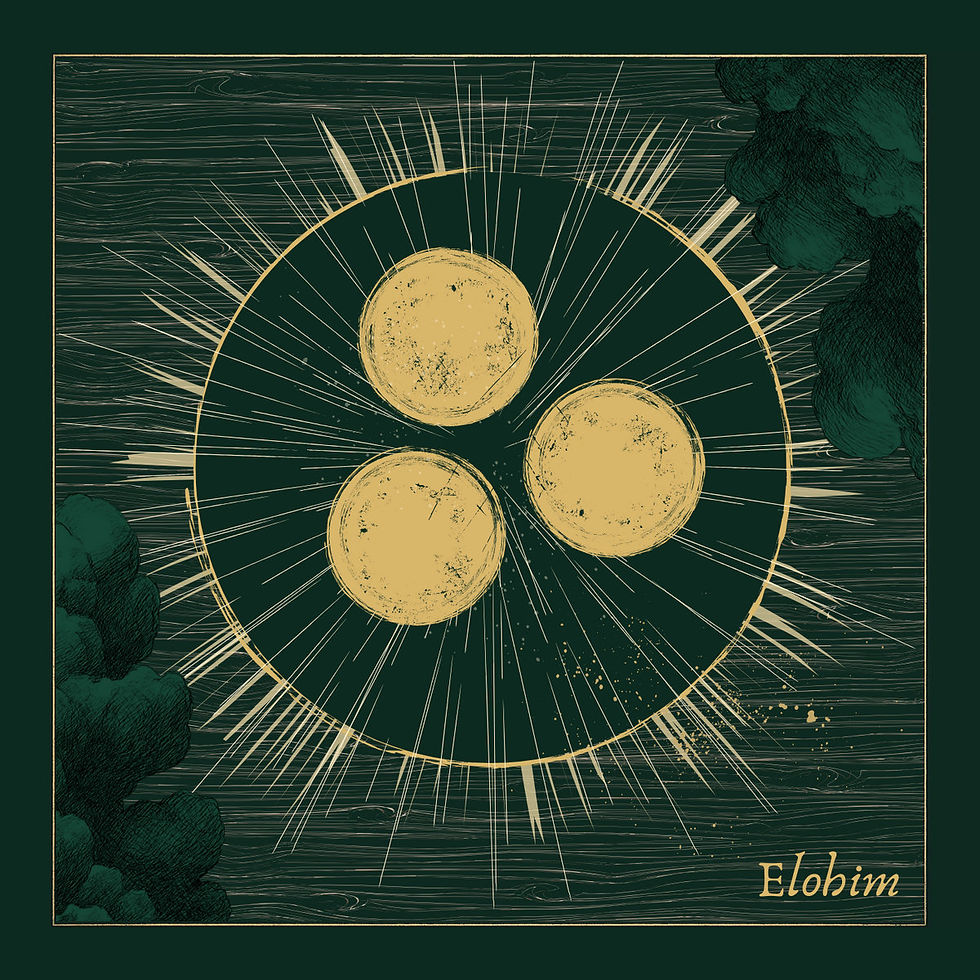
Secondly, if you were to ask a random Christian to make a statement about God and who he is, and to do so in a single sentence, they would most likely reply: “God is love”. Love is, by definition, relational. Love is outward-facing. It is considering someone other than yourself, serving someone other than yourself. It is the opposite of the self-contained, narrow, only inward-looking narcissism or selfishness. Love can only exist, play out, and be what it is inside relationship. Because love isn't a feeling or a theory, it is a relating to another, and doing so in a certain way.
How, then, could God, if he was just one ego, be Love? If he existed in the beginning, and he was self-contained and independent and one person, how can be, by his very nature, love? It is here that we see the massive and meaningful impact that is Genesis 1:1. God is declared as 𝗋̲𝖾̲𝗅̲𝖺̲𝗍̲𝗂̲𝗈̲𝗇̲𝖺̲𝗅̲ by character: he is categorised as a plural. He himself is made up of more than one - as being in relationship even within his own person.
We, in fact, are being introduced to what would later be called The Trinity: a unity between three persons. The Father, The Son, and The Holy Spirit.
This is God. God is himself (or themself!) a relationship. Elohim doesn't introduce a polytheistic system, nor multiple gods, but one God who is three. A unity so absolute we find it difficult to understand this level of complete service and devotion. But we're invited into that very mystery and beauty.
God is love; even within himself, he is existing in relationship.
In Genesis 1, God is a They, and he's about to create something beautiful into the void and the chaos.
You can download Hashem (Vol.1) here: https://nataliekendel.bandcamp.com/album/hashem
Below, I'm covering Elohim live.


Comments